3:07 An Indispensible Name in French Pâte de Verre From Liuli China Museum
中 | EN
Early 17th century French artists challenged themselves and each other to add movement and life to static material. The culmination of their efforts resulted in the heightened use of color in 18th century sculpture.
In the beginning, many artists experimented with glazed clay. Henri Cros, a 19th century French sculptor, discovered an aesthetic breakthrough and inadvertently played a major role in the history of French pâte de verre.
Cros started off using wax because its color could be manipulated. But because wax molecules vaporize with heat, it was temporary at best. He later discovered that glass shared many properties with wax - except that it was permanent. He accidently discovered that glass could hold color. He was pleasantly surprised, because glass can simultaneously integrate "light" and "color" into the material itself. These findings solidified his place as an architect of the pâte de verre movement.
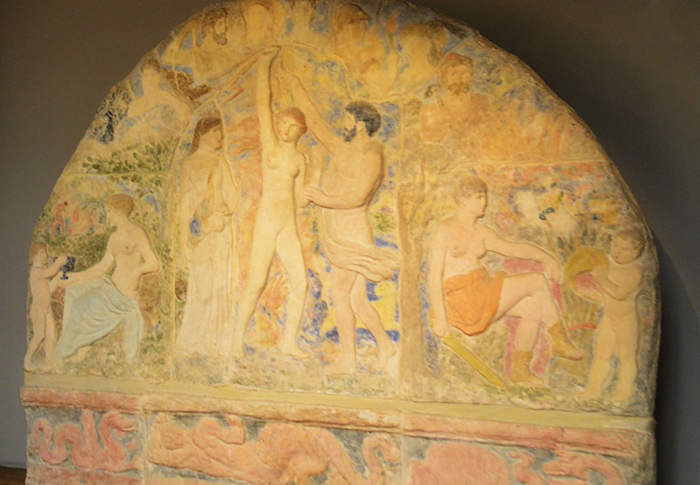
In France, the name François Décorchemont is synonymous with the technique of pate de verre itself. Although he came after Henri Cros, he advanced the technique and mastered color placement.
A close friend to Claude Monet, Décorchemont was strongly influenced by Impressionism and aimed to recreate its whimsical effect in glass. The rudimentary coal heated kilns that existed during his time, made it virtually impossible to manipulate color application and placement but Décorchemont was not one to be deterred.
Décorchemont’s grandson, Antoine Leperlier, recalls the time his grandfather came upon a rose during their stroll through the garden and noted to him that that particular flower was made up of 60% gold, 30% platinum and 10% oxidation of various metals. To a glass artist, color is a scientific observation in the interaction between color and metals.
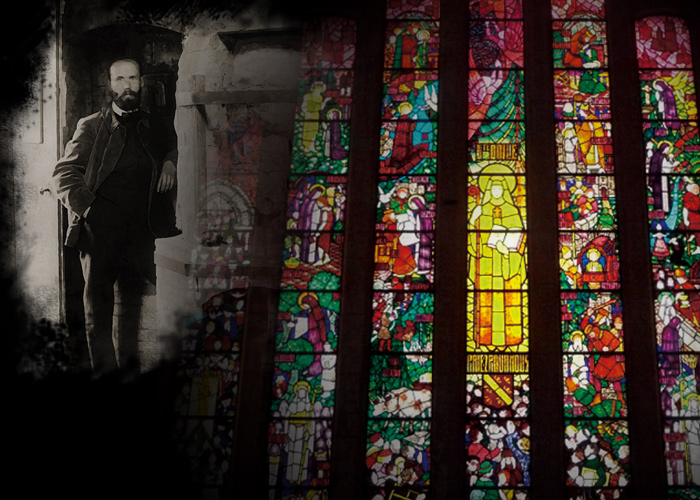
The latter part of Décorchemont’s career in glass was devoted mostly to clerical stained glass. He replaced all the church windows in his hometown as well as those in l’Église Saint-Augustin de Paris to stained glass created through pâte de verre. Each piece was substantial, rich with complex layers, and noticeably different from the typical glass of the time.
Growing up in the ancestral workshop, Decorchemont’s grandsons, Antoine and Etienne inherited his artistic calling. The art produced by the two brothers challenge the philosophical concepts of space and time.
This artistic lineage has spawned a new star.