Historic Architecture
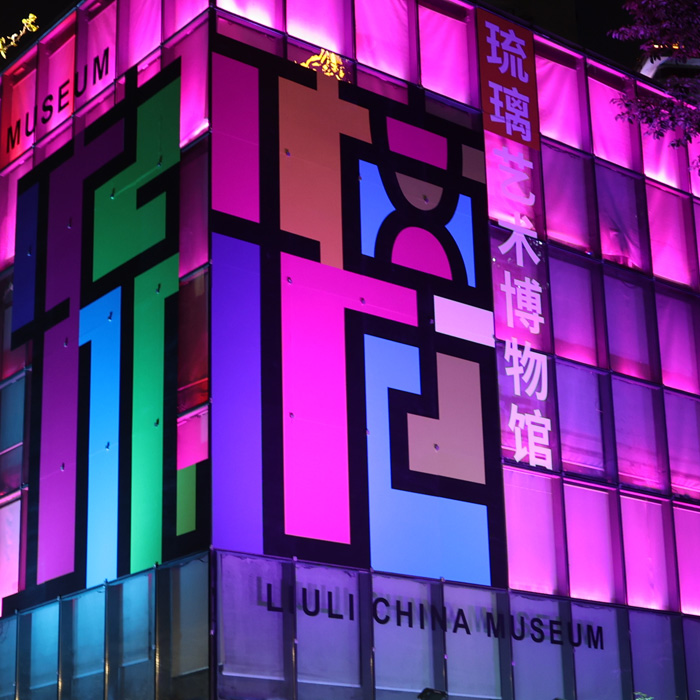
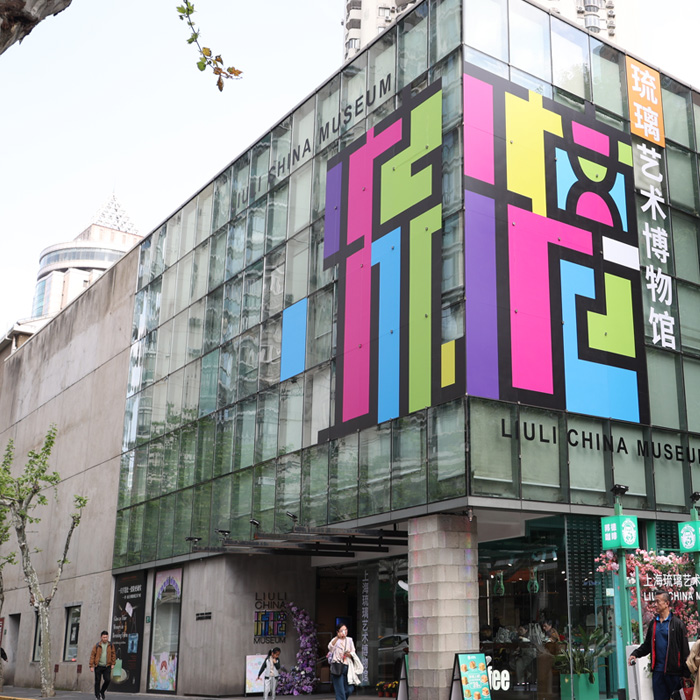
A former clock parts warehouse in 1960s Shanghai, the space was reinvisioned by artist Loretta H. Yang who retained components of the original architecture and added liuli and peony elements; the design was nominated for the Bombay Sapphire Design Award.

Liuli becomes the spirit of the museum through Yang’s design. The peony, a traditional symbol of propitiousness for the Chinese people and Liuligongfang’s visual emblem is used to convey the splendor of glass art. In this modern age, it radiates its light from the museum across the world.
The museum stands 14.7 meters high and occupies 2,400 square meters. It marries art, culture, research, education, and a library, it is a sustainable stage for cultural exchange.
Hanging from the exterior facade of the museum is a steel wire peony comprised of 5,025 petals. Completely handmade, it weighs 1.5 tons and spans 54 meters. By night, “Shanghai’s most beautiful museum” illuminates the darkness.