Collection of LIULI Artifacts
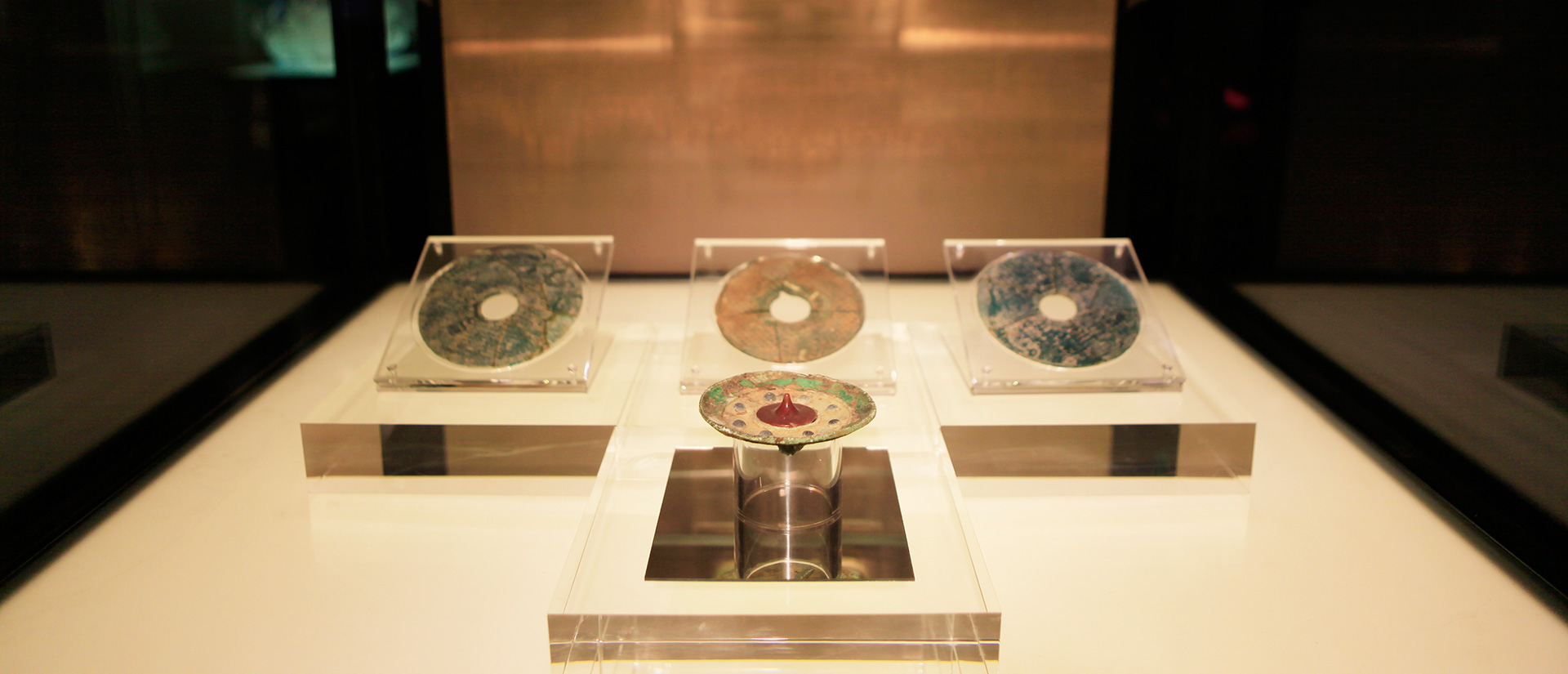
The Shanghai Museum of Glass Art houses a collection of 262 ancient Chinese glass artifacts dating from the Warring States Period to the Qing Dynasty, spanning 2,500 years of history, all authenticated by the Shanghai Museum. They range from the Warring States Period to the Ming and Qing Dynasties, covering a timeline of 2,500 years. These ancient glasses from different periods each represent the craftsmanship and artistic level of glass creation at the time, constructing a complete narrative of Chinese glass history for today's visitors.
In the 1990s, when Loretta Yang and Zhang Yi, the founders of the Shanghai Museum of Glass Art, first entered the field of glass art, they established a glass studio—Glass Workshop—and started from scratch to study and revive the "glass lost-wax casting technique," which had been lost for a thousand years. In their most financially constrained years, despite being heavily in debt, they still collected all the ancient Chinese glass they could see and hear of, because
Whether they come from the Han Dynasty or the Tang and Song Dynasties,
they are our past,
we see our past,
we know our past,
and knowing our past,
we know where we are headed in the future.
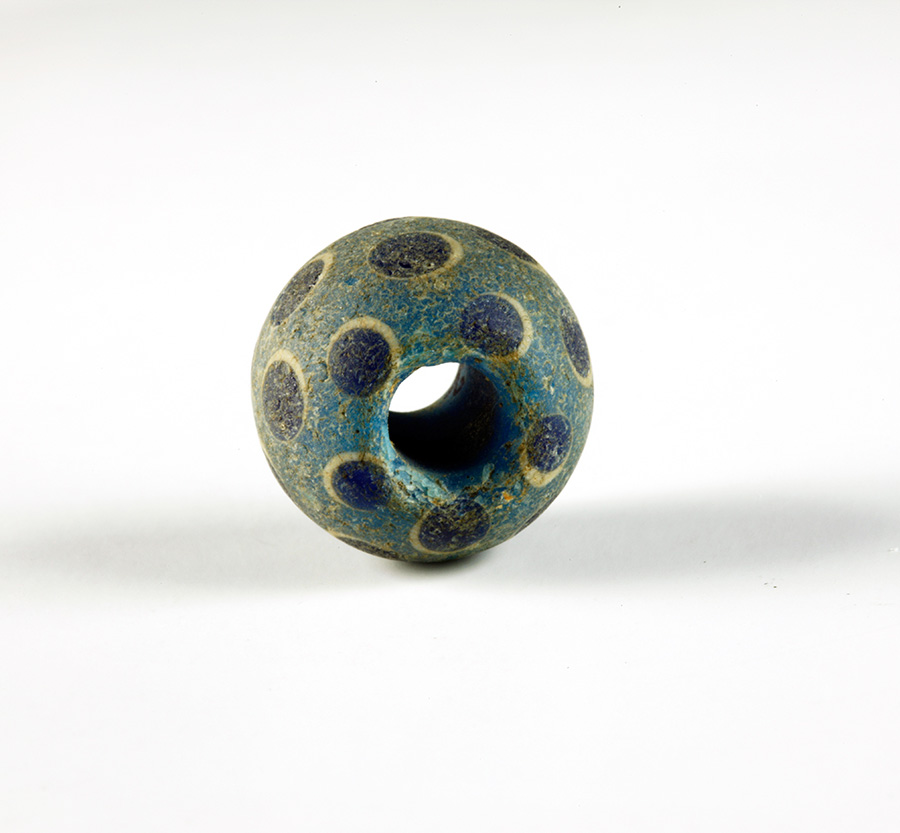
Blue LIULI Droagonfly Eye Bead
"Dragonfly Eyes" glass beads were popular during the Warring States period and were introduced to China through nomadic tribes via the Silk Road, featuring a distinct Western Asian glass style. These beads are characterized by the embedding of glass pieces of different quantities and colors, distinct from the main body of the bead, often arranged in concentric circular patterns. The resulting design resembles the compound eyes of a dragonfly, hence the name.
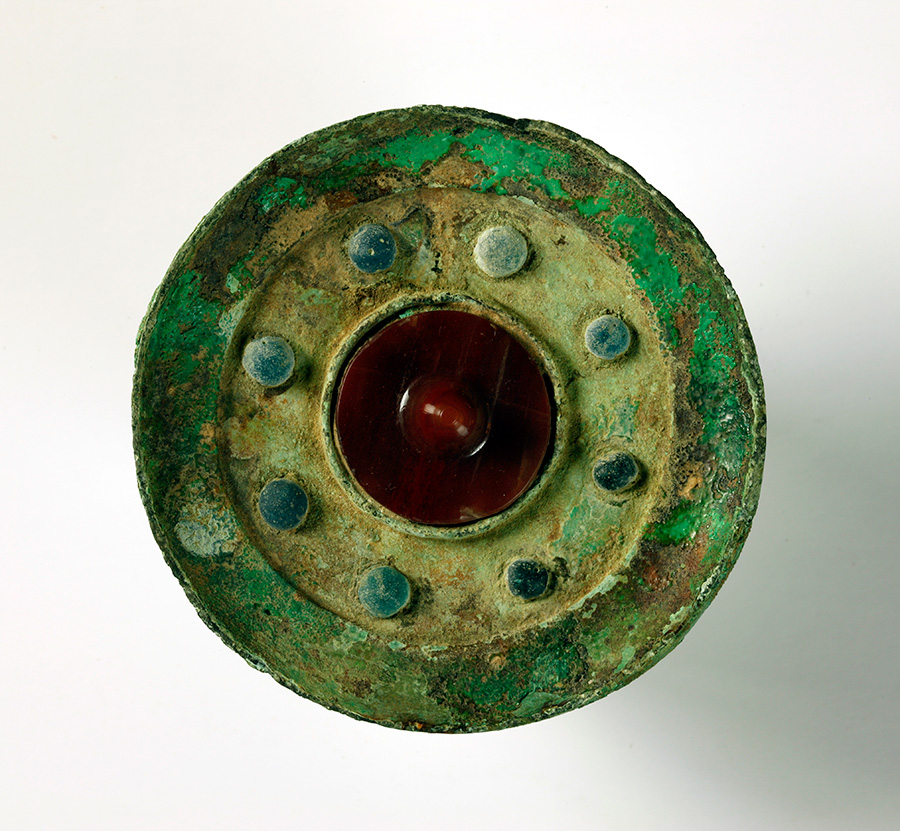
Inlaid LIULI Agate Shield-Shaped Copper Accessory
The Han Dynasty continued the inlay techniques from the Warring States period, embedding glass and other heterogeneous materials into metal objects. The shapes were exquisite and unique, and the decorations were delicate and rich, quite reminiscent of the style of the Yunnan Dian culture.
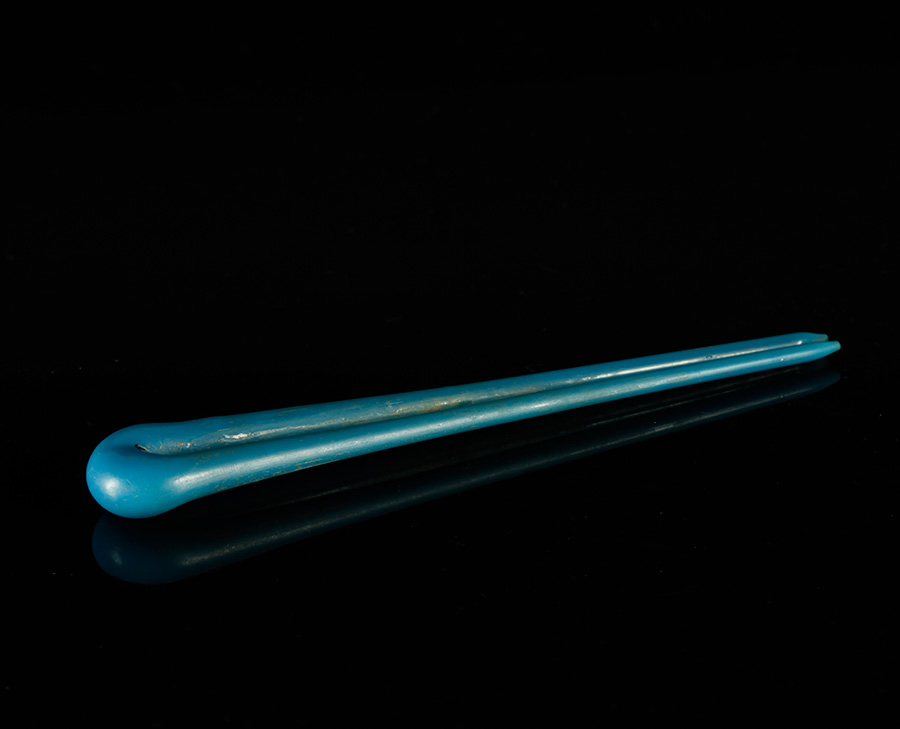
Blue LIULI Hairpin
Starting from the Tang Dynasty, it became popular for women to wear high coiffures. Volume four of the "Tang Liu Dian" states, "On the heads of commoners' daughters during marriage, one can see that small glass ornaments were very widely used at the time. Glass and gold hairpins were allowed to be coated with glass." Glass hairpins should have been made using the hot-sculpting technique, allowing for freeform shaping without molds. The design of hairpins was also common during the Tang and Song dynasties.
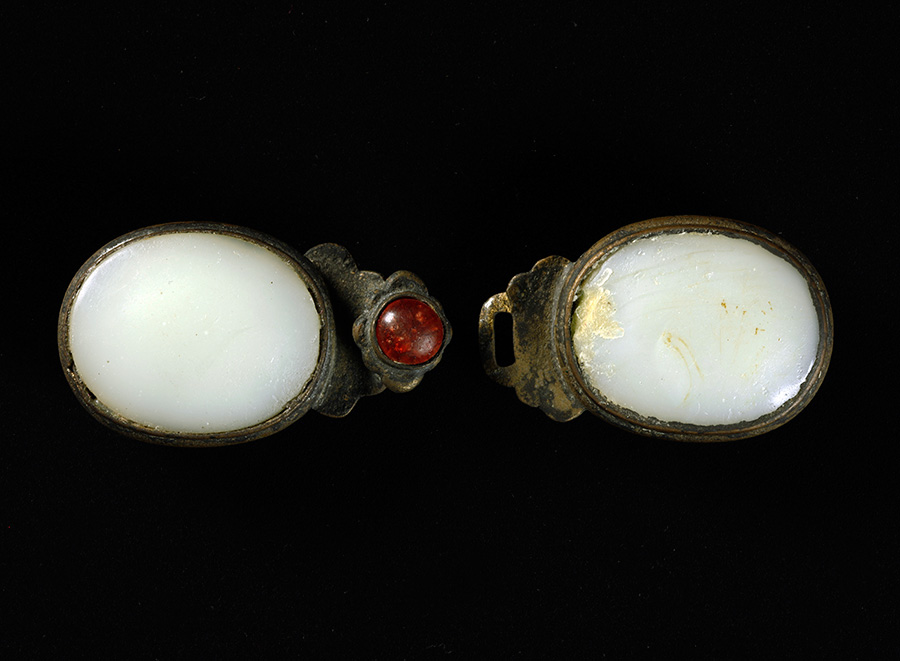
Lnlaid LIULI Copper Belt Buckle
During the Qing Dynasty, the quantity of glassware was abundant, and the techniques were intricate. The luster, color, and texture of the glass all possessed characteristics similar to porcelain. The unique technique of encased glass, a world-first, influenced the glass craftsmanship in Europe during the Art Nouveau period at the end of the 19th century. The reign of Emperor Qianlong marked the peak of glass craftsmanship, but in the mid-to-late periods, due to the gradual decline of national strength, it could not be compared to the prosperous times of the past, leading to the near disappearance of glass craftsmanship.
In the 1990s, I saw for the first time the wandering ancient glass and heard for the first time the metaphor of "solitary spirits and wandering ghosts" for nameless individuals. In the 21st century, these ancient glasses have found a home, being treasured and becoming objects of display and study, becoming the treasures of the Shanghai Museum of Glass Art.
——Tang Si-fu, former director of the Shanghai Museum of Glass Art